
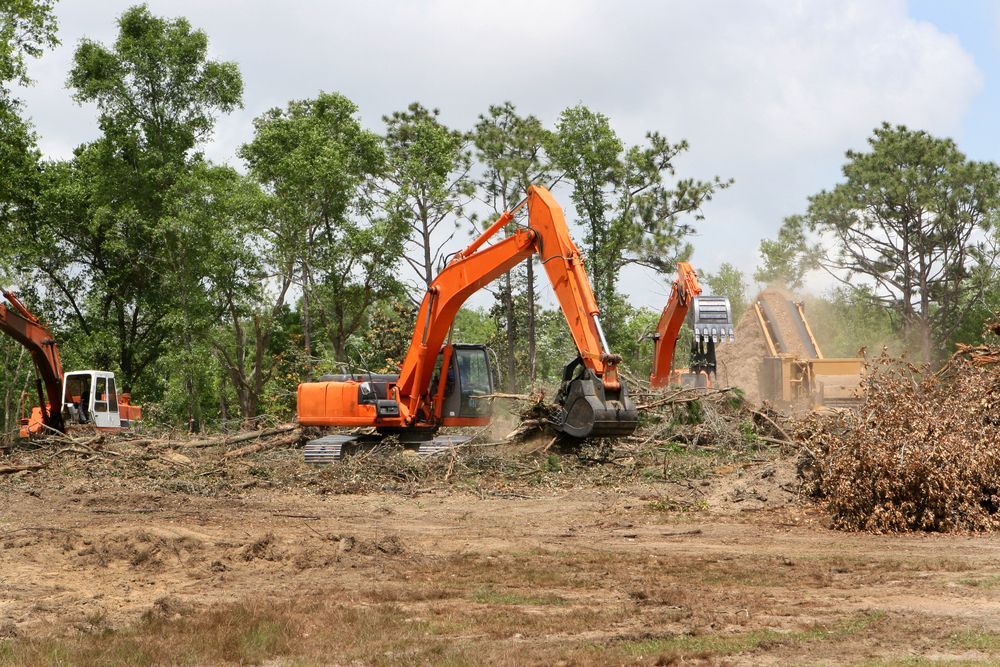
Dense Brush Removed So the Land Works Again
Brush clearing in Belton for rural acreage and ranch property overrun with mesquite and heavy overgrowth
Older rural properties across Central Texas accumulate decades of brush growth that hand tools and weekend work cannot address—mesquite, in particular, resprouts aggressively from root crowns and spreads across acreage in ways that require mechanical removal rather than cutting at the surface. Texas Clearing and Excavation clears brush on rural and ranch property from its base in Belton, using the equipment the scale of the job actually calls for rather than scaling down to tools that leave root mass behind. That matters because mesquite cut above grade without root disruption will regrow within a season, and the clearing has to be done again.
The crew marks the area to be cleared, then works through the property cutting and pulling brush and mesquite across the full footprint—not just along the fence line or road edge—so the interior of the lot is as accessible as the perimeter when the job is finished. Cut material is cleared from the ground before the crew leaves, which means the property can be walked, fenced, or taken into the next phase of site work without a separate debris removal step. Because brush clearing at Texas Clearing and Excavation is part of a wider land clearing and site preparation service, the same crew can carry the site forward into grading or road construction without a handoff to a different contractor.
Request a site assessment to determine the equipment and approach the density of growth on your property requires.
Why Brush Returns and How to Stop It
Brush clearing on rural acreage is not simply a matter of cutting what is visible at ground level. Mesquite root systems can extend well beyond the canopy of a mature shrub, and if clearing only addresses the above-ground growth, those roots remain capable of sending up new shoots within weeks. The method of removal—whether cutting, grubbing, or mechanical pulling—affects how quickly and thoroughly the brush comes back, and the right approach depends on the density of the stand, the age of the root systems, and what the property owner intends to do with the land afterward.
After a proper brush clearing, the change in the property is functional and immediate: areas that were impassable become accessible, fence lines that were buried under growth become visible and workable, and the cleared ground is ready for grazing, construction, or additional site work. Texas Clearing and Excavation treats the cleared material as part of the job scope—what gets hauled away versus what stays on site is agreed upon before work starts, so there is no ambiguity about the condition the property will be in when the crew leaves.
Properties that have gone uncleared for a long period often reveal terrain features—low spots, old fence lines, drainage channels—that were hidden under the overgrowth and that affect how the land can be used. Seeing the ground surface clearly after clearing is itself a useful step before committing to where a road, pad, or fence line will go.
Answers About How the Work Is Done
Brush clearing on rural acreage raises specific questions about what equipment is used, how the crew handles different types of growth, and what the property will look like when the work is complete.
What equipment is used to clear heavy brush and mesquite on rural property?
The crew uses tracked or wheeled machinery sized to the density of the stand—on properties with mature mesquite root systems, that typically means equipment capable of grubbing below grade rather than cutting at the surface.
How does the crew handle brush that is mixed in with trees the owner wants to keep?
Before clearing begins, the crew marks the trees and areas to be preserved, and the clearing pattern around them is adjusted to avoid root zone damage from heavy equipment.
What happens to the cut brush and mesquite after it is removed?
Cut material is either hauled off the property or staged in a designated area as agreed before work starts—the choice depends on the volume of material and the owner's plans for the cleared ground.
Why does brush clearing on acreage parcels around Belton often require different equipment than smaller suburban lots?
Rural properties in this area commonly carry decades of root mass from mesquite and cedar that has never been mechanically cleared, which means the equipment has to be sized to lift and pull root crowns rather than simply cut stems at grade.
How can you tell if brush clearing was done thoroughly rather than just surfaced?
After proper clearing, the ground surface should be free of stem bases and visible root crowns, the cut area should be consistent across the full marked footprint—not concentrated along access edges—and debris should be cleared or staged rather than left scattered across the lot.
Texas Clearing and Excavation also performs brush clearing in Harker Heights, Killeen, Nolanville, and Temple. Speak directly with the crew at (512) 642-8612 to walk through what the property holds and what clearing it completely will take.