
Dead and Problem Trees Taken Down Safely
Tree Removal in Belton for dead, leaning, and invasive trees on rural and residential property before grading or construction begins
Heavily wooded older rural properties around Belton and Killeen frequently have dead, leaning, or invasive trees standing in areas where grading or construction is planned, and those trees have to come out before any equipment can work safely around them. Texas Clearing and Excavation removes trees on rural and residential property as part of land clearing and site preparation, covering felling, limbing, and debris handling so the site is left ready for the next phase of work. Property owners preparing a lot for a building pad, a road, or a cleared pasture are the primary clients for this service.
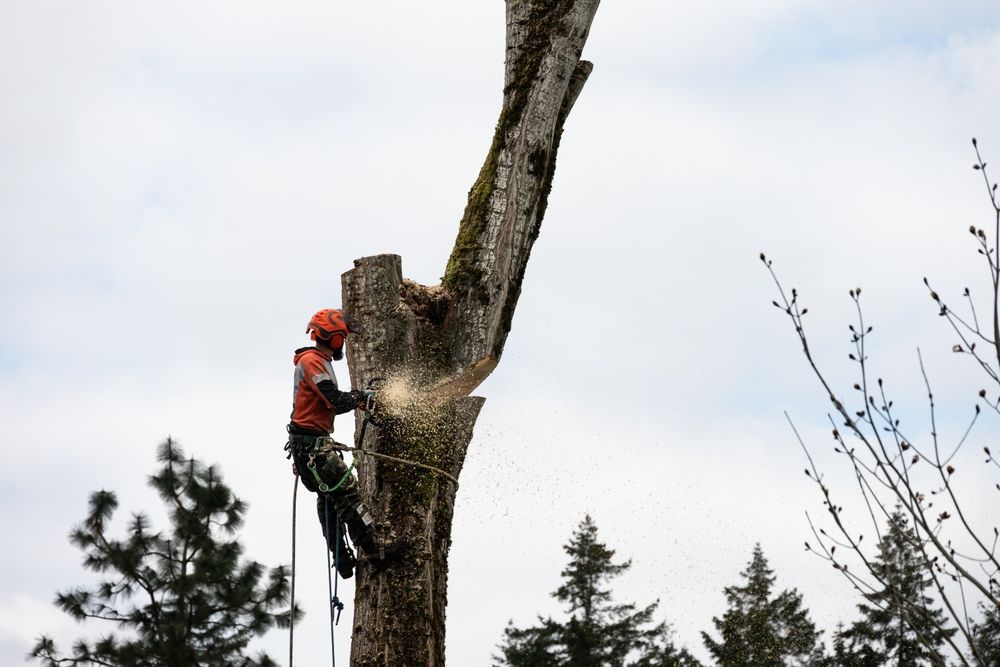
Before any cut is made, the crew checks the tree for lean direction, root condition, and proximity to structures, fences, and utility lines. Trees are felled in sections where necessary to control where material lands, particularly when a structure or fence sits within fall distance. Stumps can be ground out or left based on what the next phase requires, and debris is chipped or hauled depending on volume and site conditions. Those decisions are confirmed on the site visit so the crew arrives with the right equipment for the job.
Request a site visit to walk the trees that need to come down and confirm what happens to stumps and brush before removal begins.
What Tree Removal Actually Accomplishes
Removing a tree is not a single action but a sequenced set of decisions made in the field based on the specific conditions around each tree. The lean assessment determines the direction of the fell; the root condition assessment determines whether the base is structurally sound enough to fell in one piece or must be cut in sections from the top down; and the proximity assessment determines how close other structures are to the work zone. Skipping any of those checks is what causes removal jobs to go wrong.
Once removal is complete, the space where the tree stood is open ground, the debris is no longer on the site, and grading equipment can work across the area without navigating around a standing tree or over a stump that would damage undercarriage. Texas Clearing and Excavation coordinates tree removal directly with clearing and grading work, so the transition from removal to site prep happens without a scheduling gap between different contractors.
Whether stumps are ground out or left is a decision driven by what the ground will be used for afterward. A stump left below grade in a future building pad or concrete area will create a void as it decomposes, which is why stump grinding is typically the right call when construction follows. Stumps in areas that will remain as open land may be left without consequence. That determination is made on the site visit based on the planned use.
Questions Before Starting Your Project
The questions below address how tree removal is performed, what drives decisions on site, and how removal fits into broader site work on rural and acreage properties.
How does the crew decide whether to fell a tree in one piece or in sections?
The decision is based on lean direction, the height and weight distribution of the canopy, and how close structures or fences are to the fall zone. A tree that cannot be safely dropped in a single fell without landing on something is cut from the top down in sections, working toward the base.
What root condition tells the crew a tree base is unsafe to fell from the ground?
Visible rot at the base, fungal growth along the root flare, or a hollow sound when the base is struck are indicators that the trunk may not hold under the stress of a standard fell. Those trees are typically sectioned from above rather than cut at the base in a single operation.
Why does stump handling matter when the site is being prepared for a building or pad?
A stump left in the ground beneath a future building or concrete pad will decompose over time, creating a void that allows the pad or foundation above it to settle unevenly. Grinding the stump below the surface before any fill or concrete work eliminates that risk.
How is tree removal sequenced with grading on a rural lot in Belton?
Trees come out before grading equipment moves across the site. Stumps are ground or removed at the same stage so the blade has a clean, obstacle-free surface to work. Running a dozer across ground with buried stumps risks equipment damage and leaves voids that affect the finished grade.
What should you confirm on the site visit about debris handling?
Confirm whether brush will be chipped and left on site, chipped and hauled, or piled for burning if the property allows it. Also confirm stump handling for each tree. Getting those details settled before work starts means the site is in the condition you actually need when the crew finishes.
Texas Clearing and Excavation also performs tree removal in Harker Heights, Killeen, Nolanville, and Temple. To arrange a site visit for tree removal on your property, contact Texas Clearing and Excavation with the number of trees and a general description of site conditions so the crew can prepare for the job before arriving.