
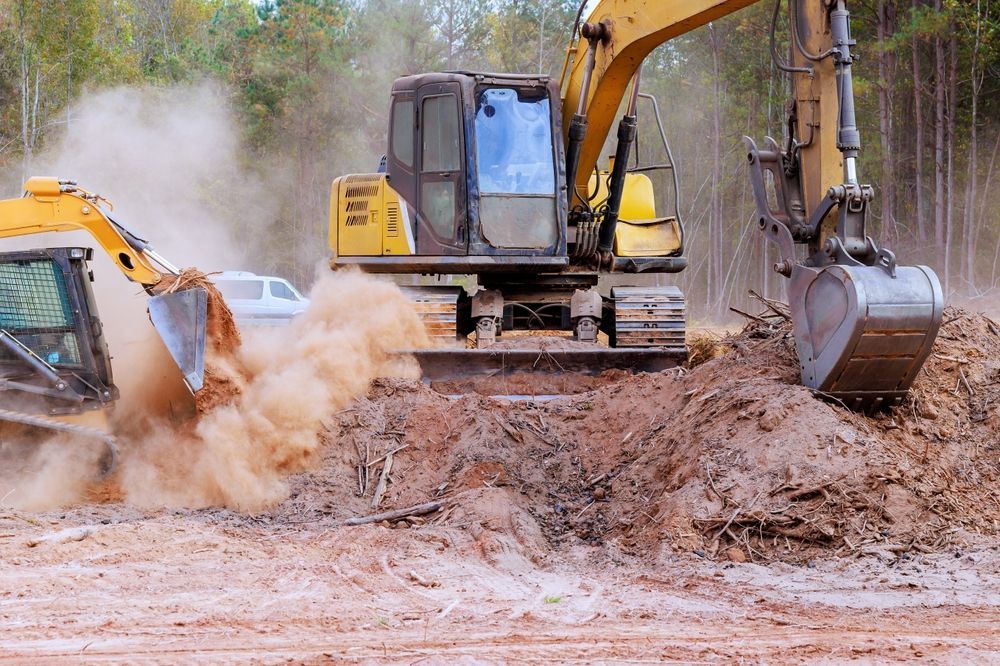
Cleared Land Shaped to a Usable Surface
Land grading in Belton for rural lots and acreage that need leveling and slope correction before building or site work
The surface of a cleared rural lot rarely arrives flat. Years of growth, erosion, old ruts from equipment or grazing, and the natural terrain of Central Texas acreage leave most properties with high spots, low spots, and uneven areas that make construction, paving, or even basic site use impractical without grading first. Texas Clearing and Excavation performs land grading from its base in Belton, shaping cleared acreage and rural lots to a finished surface that drains properly and supports whatever comes next. Grading follows clearing on the same job, which means the crew setting grade already knows the site's terrain rather than arriving cold to an unfamiliar property.
The process starts with establishing the target finished grade for the area—what elevation the surface needs to reach, how it needs to slope for drainage, and where material needs to move to get there. The crew cuts high spots and uses that material to fill low areas, working across the lot with equipment sized to the scale of the project. On larger acreage parcels in the Nolanville and surrounding areas, that can mean significant earthmoving before the surface is consistent enough to call finished. The goal at the end of grading is a surface that is stable, correctly sloped, and ready for road base, a building pad, or whatever the next phase requires.
Schedule a site evaluation to confirm what the ground condition requires before grading is scoped.
How Excavation Addresses Uneven Rural Ground
Grading is the step that converts a cleared but uneven surface into something a contractor can actually build on. The process involves more than smoothing—it requires reading the existing terrain, setting the target elevations, and moving material in a sequence that does not create new soft spots or drainage problems in the process of correcting old ones. On rural lots where years of growth have masked the actual ground surface, the grading phase often reveals terrain conditions that were not visible before clearing, and the crew has to adjust the approach based on what the exposed ground actually shows.
After grading, the specific changes are observable and practical: the surface drains in the intended direction rather than pooling at low points, the lot can be driven across without tracking through ruts or soft areas, and the elevation is consistent enough that a foundation contractor or paving crew can begin without additional surface prep. Texas Clearing and Excavation handles grading as part of its full site work service, so the same crew that removed the brush and trees is the one setting the finished grade—a handoff point that often introduces errors is removed from the process entirely.
The amount of material that has to move during grading depends on how uneven the site is and what the finished use requires. A building pad needs tighter tolerances than a pasture access road, and a pond site requires specific slope contours rather than a flat finish. Those distinctions shape how long grading takes and what equipment the job calls for, and both are established before work begins rather than discovered mid-project.
Questions Before Starting Your Grading Project
Grading on rural acreage involves specific decisions about finished elevation, drainage direction, material movement, and surface tolerance that affect every phase of work that follows. These answers cover the most common questions about how the work is actually performed.
What has to be done to a site before grading can begin?
Clearing has to be complete first—stumps, root mass, and debris left on the ground will be buried under graded material and create voids or soft spots in the finished surface if they are not removed before the blade touches the ground.
How does the crew establish the correct finished grade for a rural lot?
The target elevation and slope are set based on the intended use—building pad, road approach, or pasture—and the crew uses grade stakes or laser-level references to hold that target consistently across the full graded area.
Why do rural lots around Belton often need more significant grading than a flat surface suggests?
Properties that have been in pasture or brush cover for decades accumulate uneven surface conditions from erosion, old ruts, and root die-off that are not visible until clearing is finished—the actual ground is often more variable than it appears before work starts.
What does a properly graded surface look like when the work is finished?
The finished grade should be consistent in elevation across the footprint, slope in the intended drainage direction without low spots or flat pockets, and be firm enough to drive across without leaving ruts under normal equipment loads.
How does the grading sequence differ for a building pad versus a property access road?
A building pad requires a tighter, more level finish across a defined footprint, while a road grade is shaped longitudinally with crowned cross-sections for drainage—the two tolerances are different, and the equipment pass pattern reflects that difference.
Texas Clearing and Excavation also performs land grading in Harker Heights, Killeen, Nolanville, and Temple. Reach Texas Clearing and Excavation at (512) 642-8612 to walk through the site conditions and confirm what the grading scope will involve before any equipment is mobilized.