
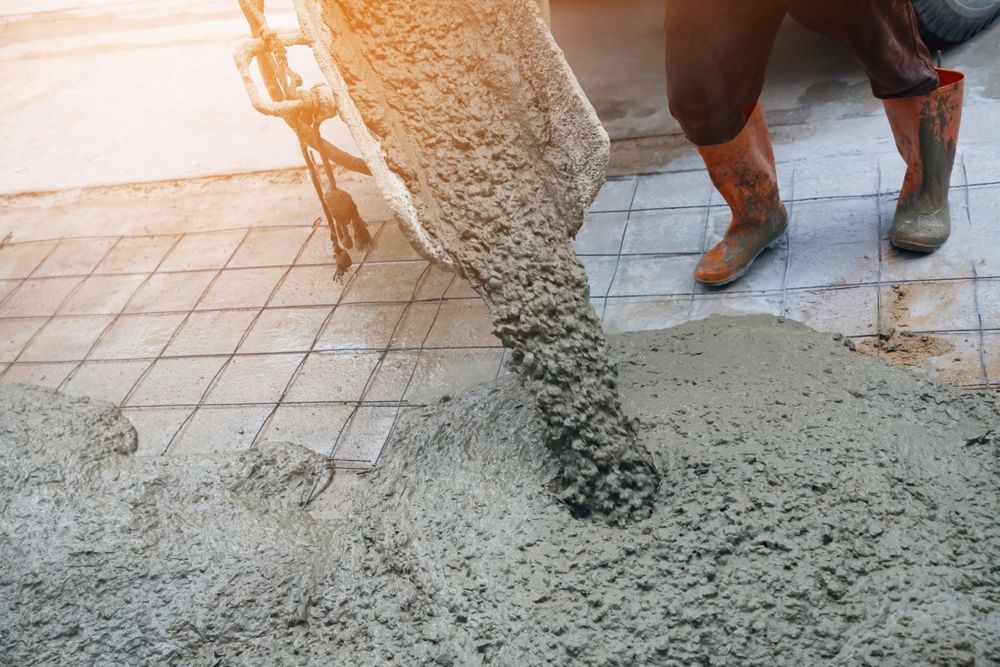
Slabs and Pads Built on Prepared Ground
Concrete Services in Belton for equipment pads, storage slabs, and building foundations on cleared and graded rural property
Rural properties around Belton frequently need a level concrete pad placed on ground that has already been cleared and graded before any pour makes sense. Texas Clearing and Excavation provides concrete services tied directly to that sequence, handling site preparation and the concrete work with the same crew so the base the slab sits on is one the company has already compacted and graded itself. Landowners who need a pad for equipment, a slab under a storage building, or a foundation tied to a cleared site are the primary clients for this work.
The process begins with forming the area to the required size and depth, compacting and grading the sub-base, then placing and finishing the concrete to the agreed thickness and layout. Because the same crew that cleared and graded the ground also sets the forms and pours the slab, there is no handoff between a clearing contractor and a separate concrete company. That continuity matters on rural lots where the ground condition after clearing directly affects how the sub-base behaves under a slab.
Arrange a site visit to confirm the pad dimensions, sub-base requirements, and how the pour fits into your broader site work schedule.
How the Pour Follows the Groundwork
Concrete placed on a poorly prepared sub-base will shift, crack, or settle unevenly over time, which is why the grading and compaction phase is not a formality. The crew sets forms to contain the pour, grades and compacts the material beneath to create a stable, uniform base, and then places the concrete in a single coordinated operation. Thickness and layout are confirmed before the pour so adjustments can be made at the form stage rather than after placement.
Once the concrete cures, what you see is a flat, finished slab set flush with the surrounding grade, ready to carry equipment loads or anchor a building without uneven edges or surface voids. Texas Clearing and Excavation finishes the surface to the specified tolerance so the pad functions for its intended use from the day it sets.
The scope of concrete work offered here is tied to site work and land projects rather than interior or decorative applications. Pads, slabs, and similar site-related pours are within scope; ornamental or specialty interior flatwork is handled by dedicated finishing contractors. Knowing the end use of the slab before the site visit allows the crew to set the correct depth and reinforcement layout for the load it will carry.
What Property Owners Ask About the Work
The questions below address how concrete site work is performed and what affects the outcome on rural and acreage properties.
What has to happen to the ground before concrete is poured?
The sub-base must be graded to a consistent elevation, compacted to eliminate soft spots, and free of loose debris. Pouring on unprepared ground is the most common reason slabs crack or settle unevenly after placement.
How does the crew determine the correct slab thickness for a given use?
Thickness is driven by what the slab will support. Equipment pads and building foundations carry heavier point loads than simple storage slabs, so the depth and reinforcement layout are set based on the intended use before forms are placed.
Why does form placement matter before the pour begins?
Forms define the final footprint and edge of the slab. If they shift or flex during the pour, the finished edges will be uneven and may not meet the building or pad dimensions you need. Setting and bracing forms correctly is what holds the layout through the entire placement.
How does an in-house crew handling both grading and concrete affect the result on a rural lot in Belton?
When the same crew grades the sub-base and pours the slab, any soft areas or grade inconsistencies found during compaction are corrected before the pour rather than discovered afterward. On acreage properties with variable soil conditions after clearing, that sequencing reduces the risk of post-pour settlement.
What should you confirm before the crew sets forms on your property?
Confirm the finished pad elevation relative to the surrounding grade, the dimensions and intended load, and whether any utility lines run beneath the pour area. Getting those details settled before forms go in prevents costly adjustments after placement begins.
Texas Clearing and Excavation also performs concrete services in Killeen, Harker Heights, Nolanville, and Temple. To discuss a specific pad or slab project, contact Texas Clearing and Excavation directly and describe the site conditions and intended use so the crew can assess the scope before the site visit.